Back
 Email Me
2025 • Fintech • Case study
Tpay
TPay is an all-in-one financial platform designed to simplify how individuals manage everyday finances and how businesses handle payments, payroll, invoicing, and other essential financial operations
View Live App
ABOUT THE PROJECT
What Is Tpay?
TPay is a financial platform designed to simplify how individuals and businesses manage their financial activities. By bringing essential financial services into a connected digital experience, the platform aims to make everyday financial tasks more accessible, convenient, and efficient.
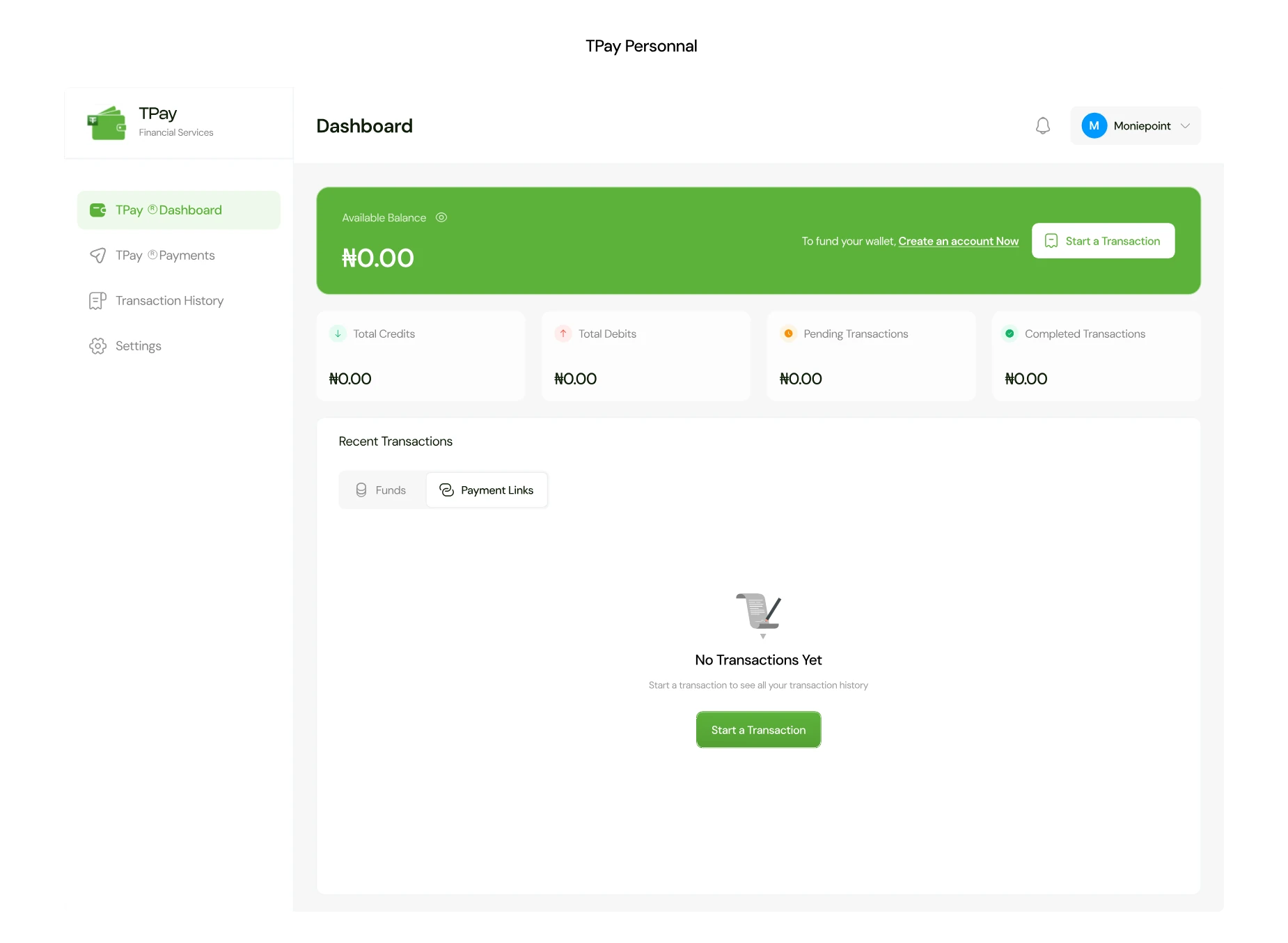
TPay Personal caters to individuals, providing access to personal financial services and everyday transactions.
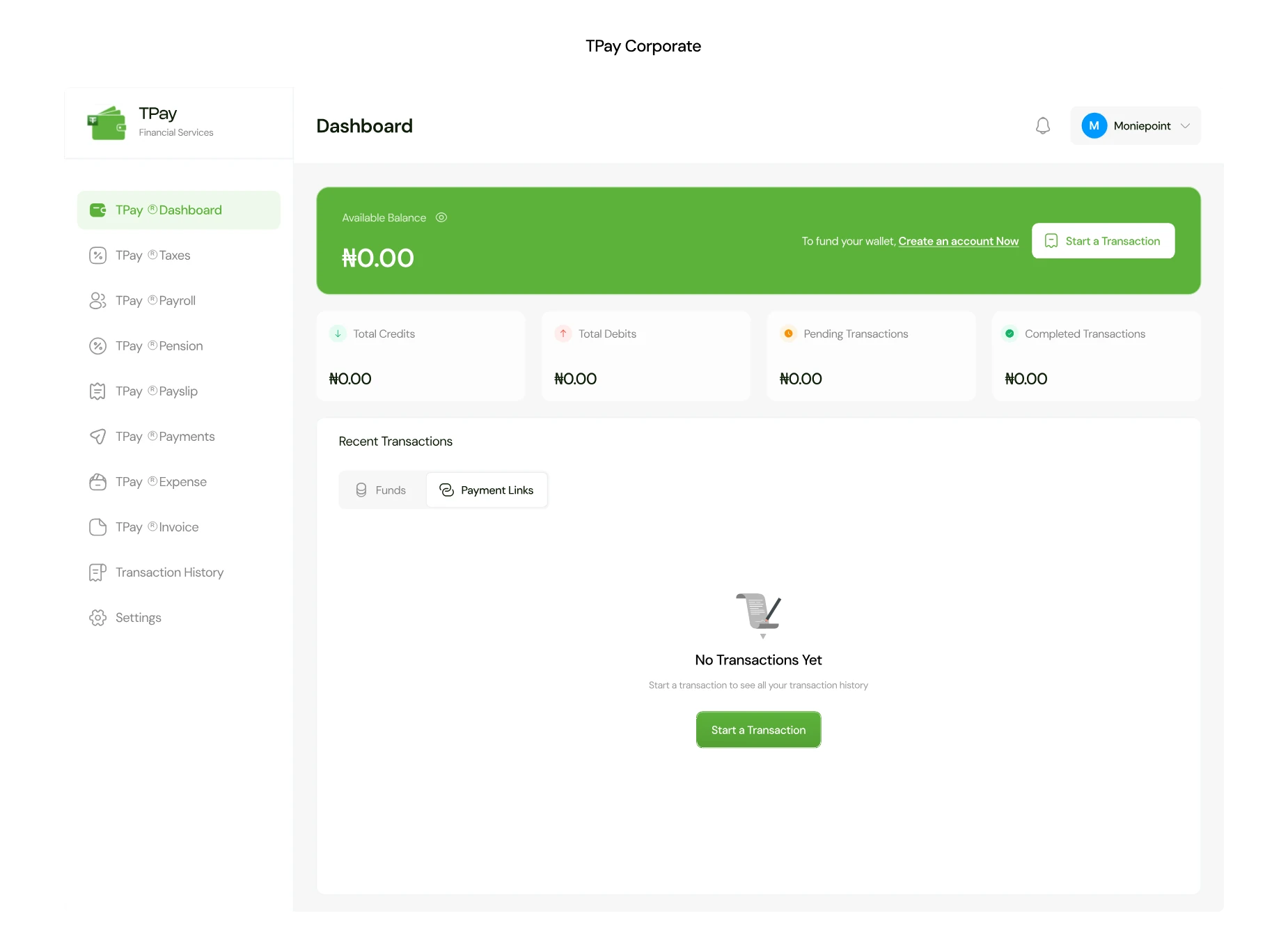
TPay Corporate on the other hand, is designed for businesses, bringing together financial operations such as payments, payroll, invoicing, expense management, tax compliance, and vendor payments. Together, these offerings address the financial needs of users across both personal and business contexts.
The design challenge was to create clear, intuitive experiences that serve these different user groups and their distinct needs. While individual users need a straightforward way to manage everyday financial activities, business users require greater visibility, control, and structure when handling complex financial workflows
THE PROBLEM
Reason For The Redesign
Friction in Everyday Transactions
Routine financial activities should be straightforward to complete. Unclear navigation, unnecessary steps, or confusing transaction feedback can create friction for individuals making payments and businesses processing financial transactions
Complexity in Business Financial Operations
Businesses must coordinate activities such as payroll, invoicing, expense tracking, taxes, and vendor payments. Managing these responsibilities can become complicated when workflows are difficult to navigate or financial information is not easy to access.
Disconnected Financial Needs
Individuals and businesses have different financial responsibilities, but both need convenient ways to manage transactions and access financial services. Experiences that do not clearly address these different needs can make it harder for users to find the right tools for their situation.
GOALS
What Are We Planning To Achieve?
To create a clear, intuitive, and connected financial experience that helps individuals manage everyday transactions with ease while enabling businesses to handle complex financial operations more efficiently.
The design goal was to simplify key user journeys, improve navigation and information hierarchy, and make essential financial services easier to discover and use. At the same time, the experience needed to accommodate the distinct needs of personal and corporate users, from straightforward everyday transactions to more structured business workflows.
Ultimately, the aim was to make financial management feel more accessible for individuals and more efficient, transparent, and manageable for businesses
DESIGN PROCESS
Understanding problems, exploring possibilities, refining solutions
Understanding two different financial audiences
I focused on understanding the financial needs of individuals and businesses. While individuals need convenient ways to manage everyday finances, businesses require broader tools for payroll, invoicing, vendor payments, and tax compliance. These insights shaped a platform that serves both audiences with experiences tailored to their needs.
Defining the product experience
With a clearer understanding of user needs, I defined how TPay's personal and corporate services would be structured, ensuring features were easy to find and the platform could scale without compromising usability.
Structuring the user journeys
With the product structure and key workflows defined, I translated them into interface concepts that balanced clarity, usability, and visual consistency. I explored how information should be prioritized, how complex financial data could be presented clearly, and how users could recognize important actions.
Validating the experience through real-world scenarios
I used interactive prototypes to explore how the proposed journeys would work beyond static screens. I considered realistic scenarios, such as a personal user completing a transaction or a business user processing a payment and reviewing its status. These scenarios helped evaluate whether the information was clear, the next steps were predictable, and users could understand the outcome of their actions. Feedback and testing, where available, would inform further iterations before the designs were finalized.
FINAL PRODUCT
High Fidelity Designs
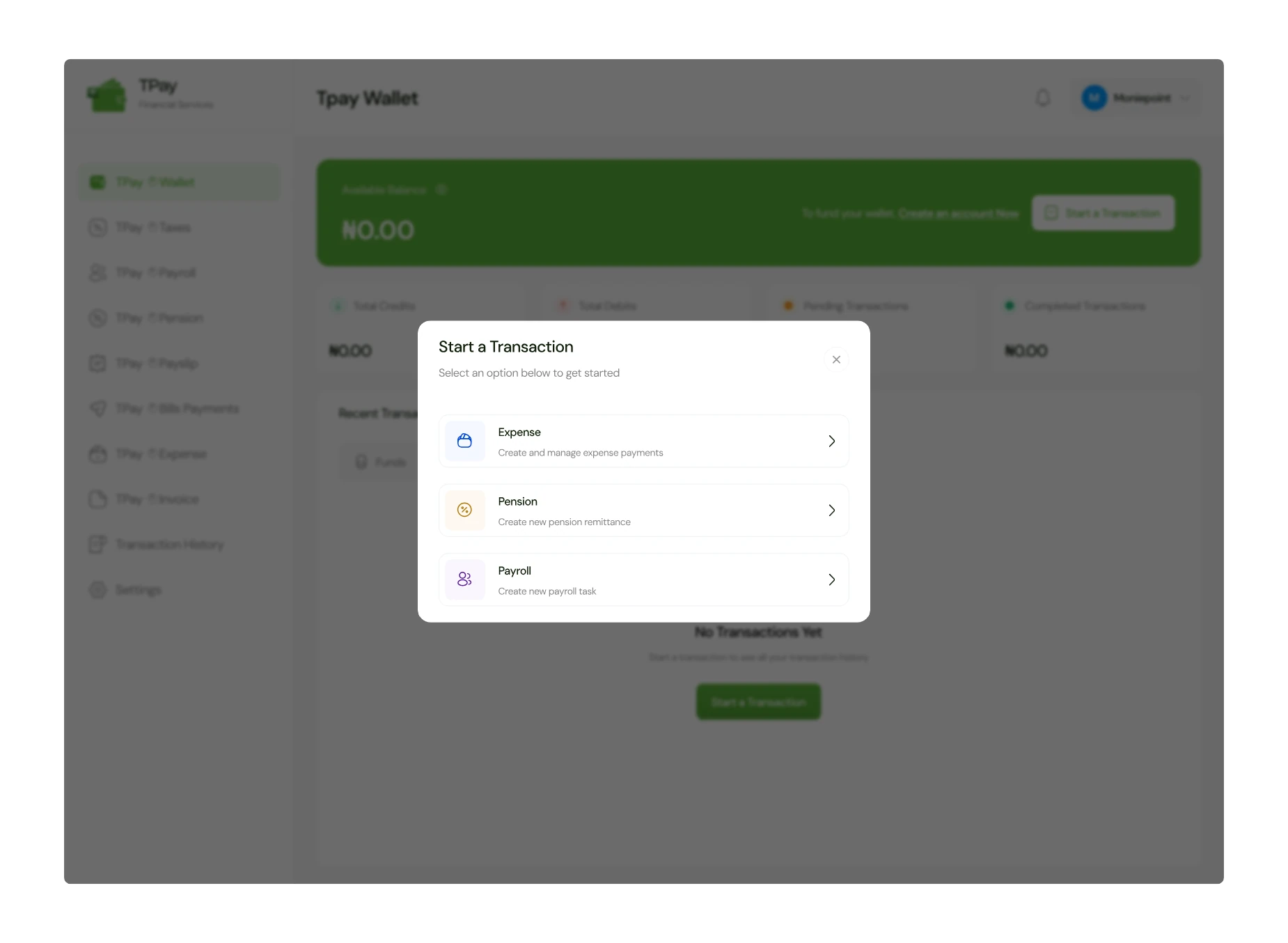
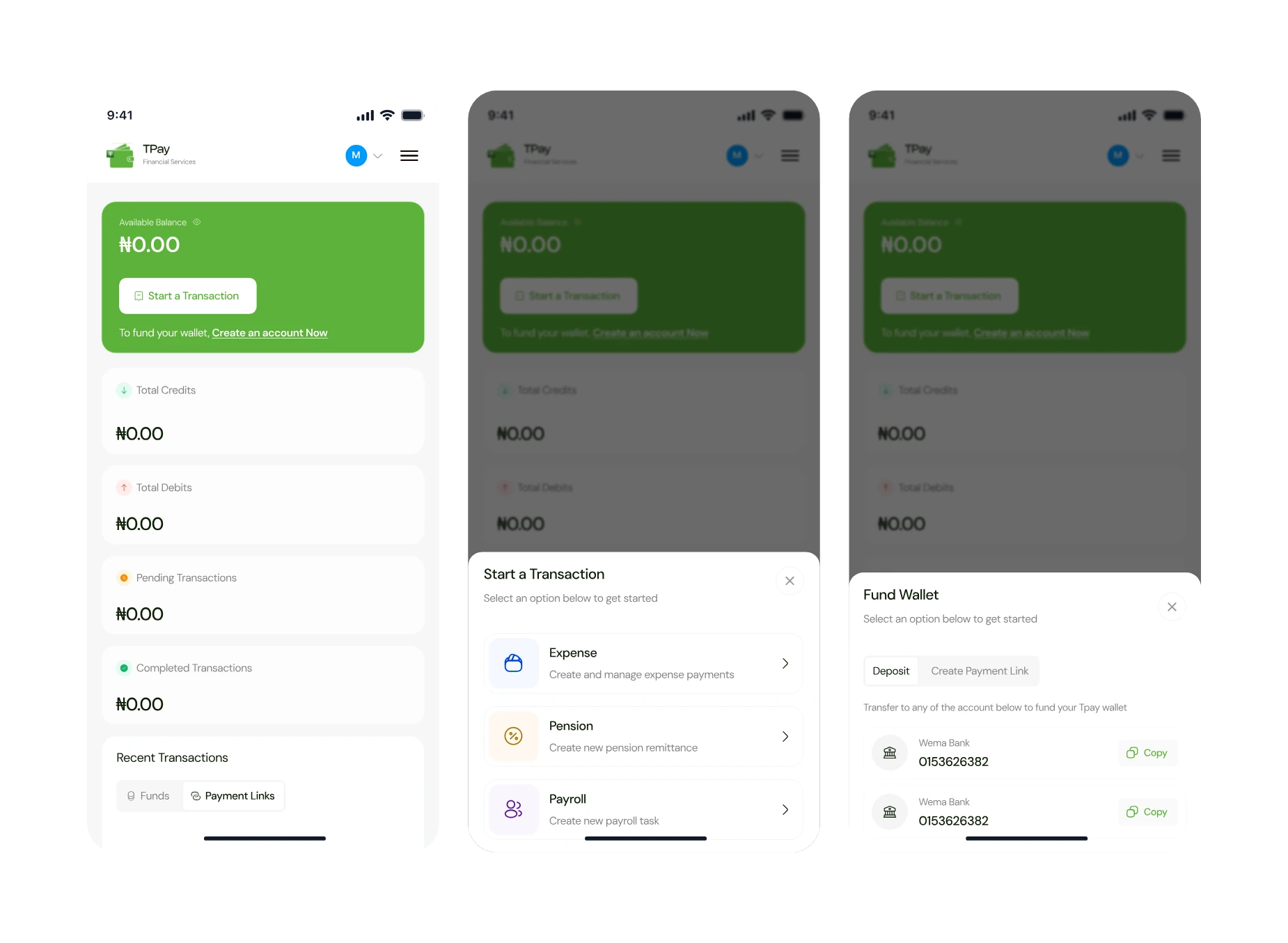
Dashboard
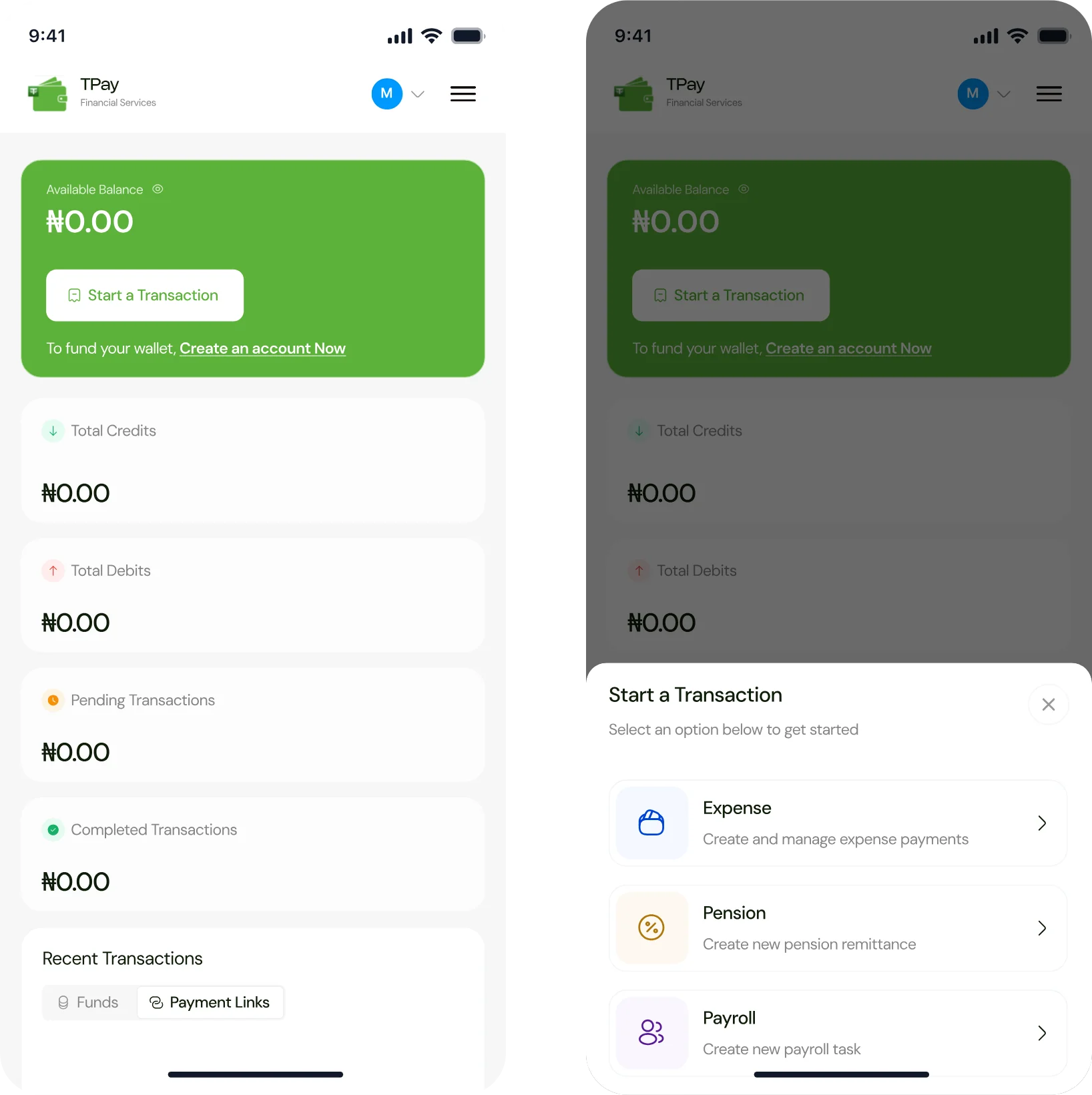
Users can see their balance, start transactions and also view history on every transactions they have made
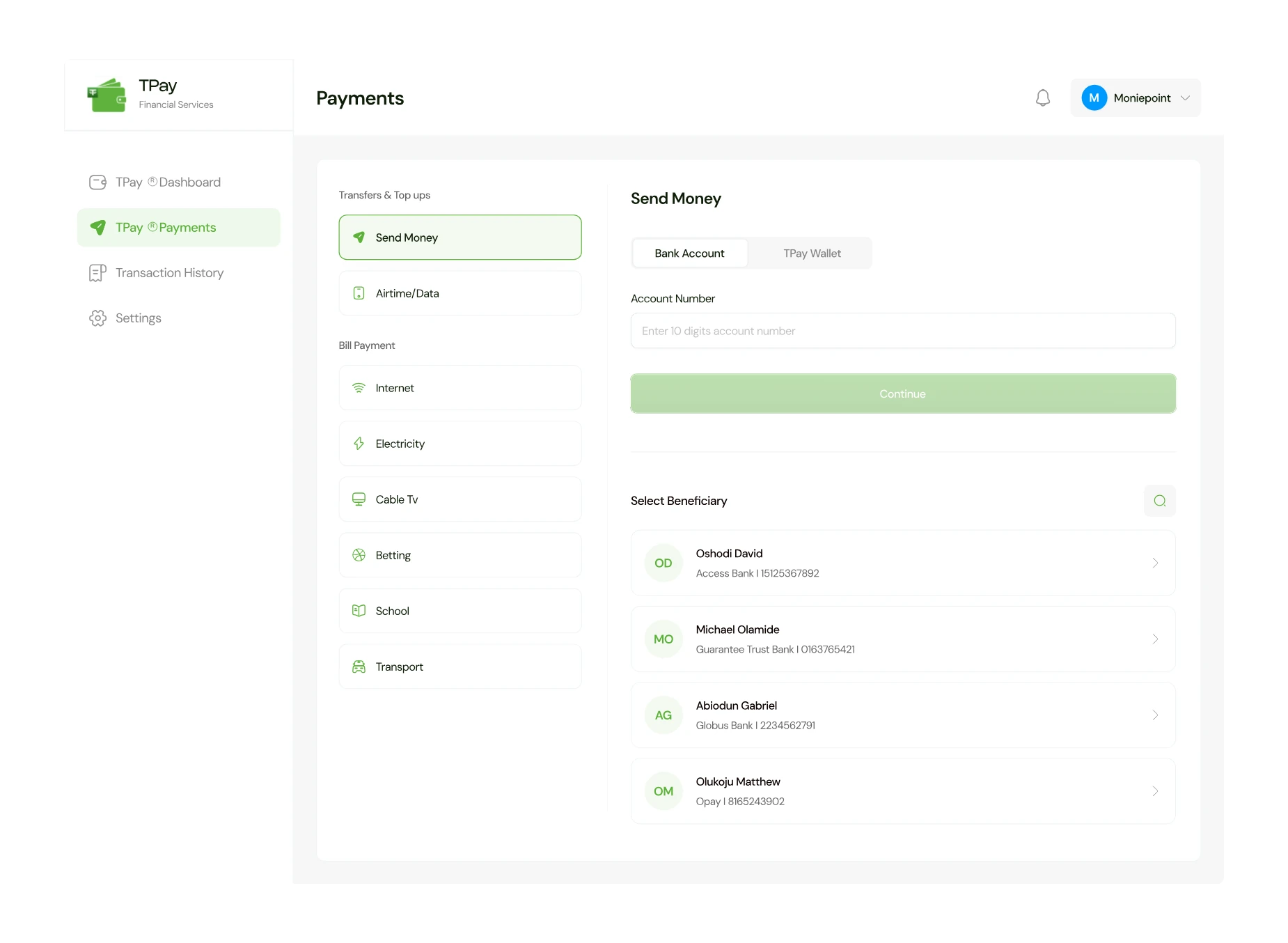
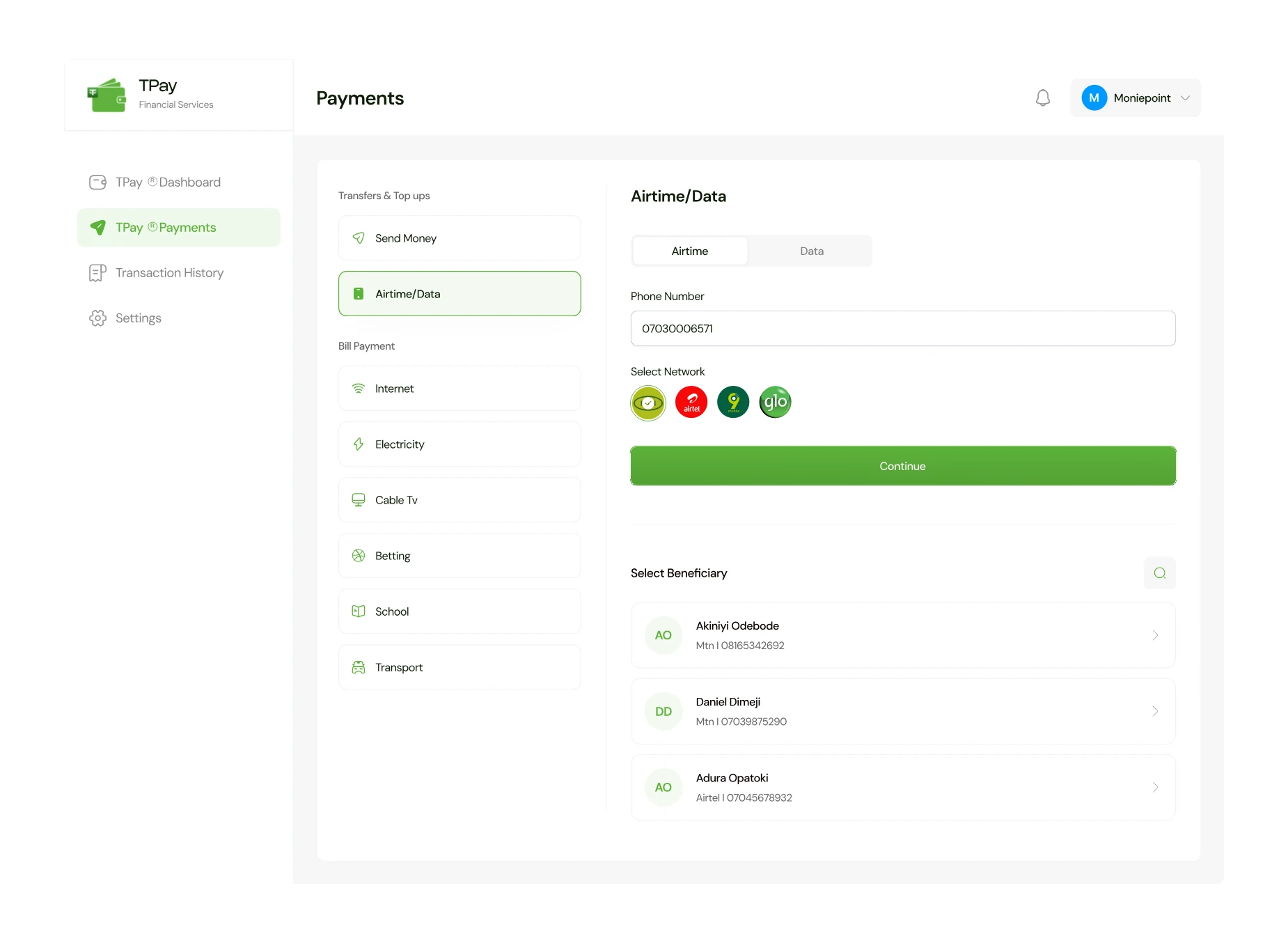
Payments
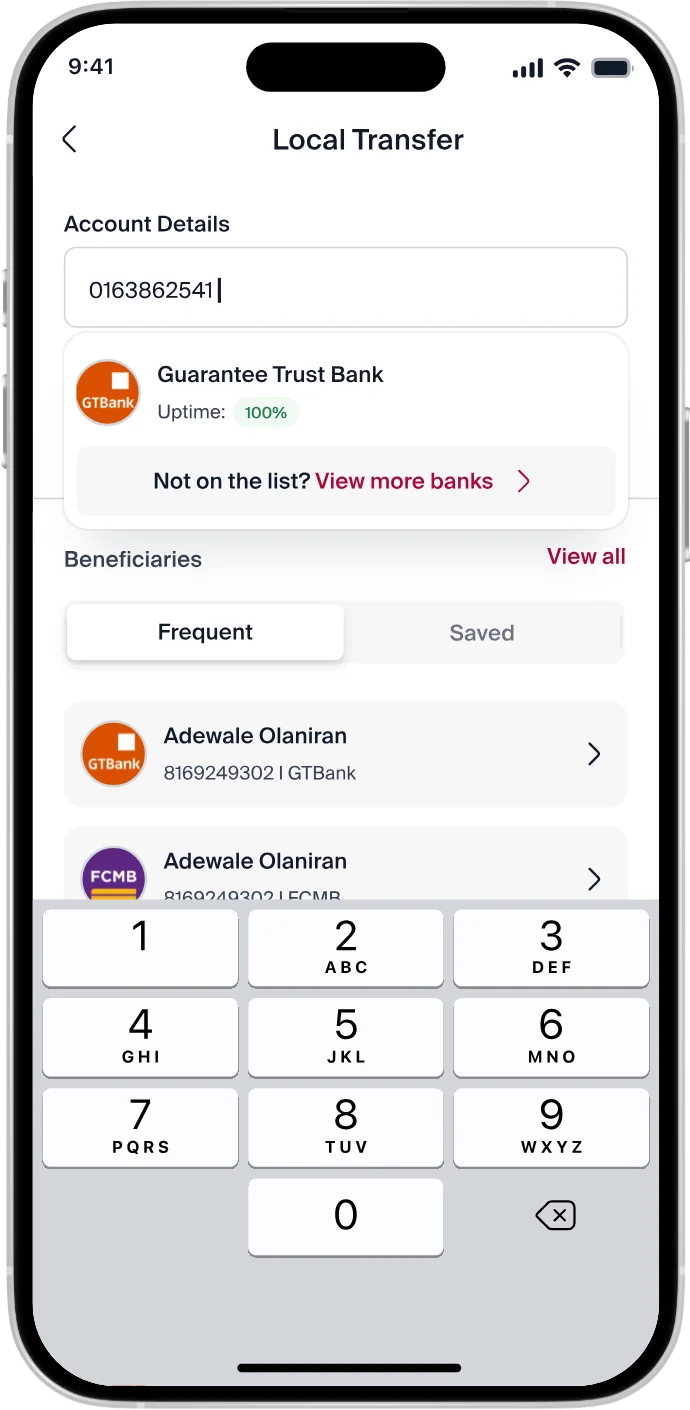
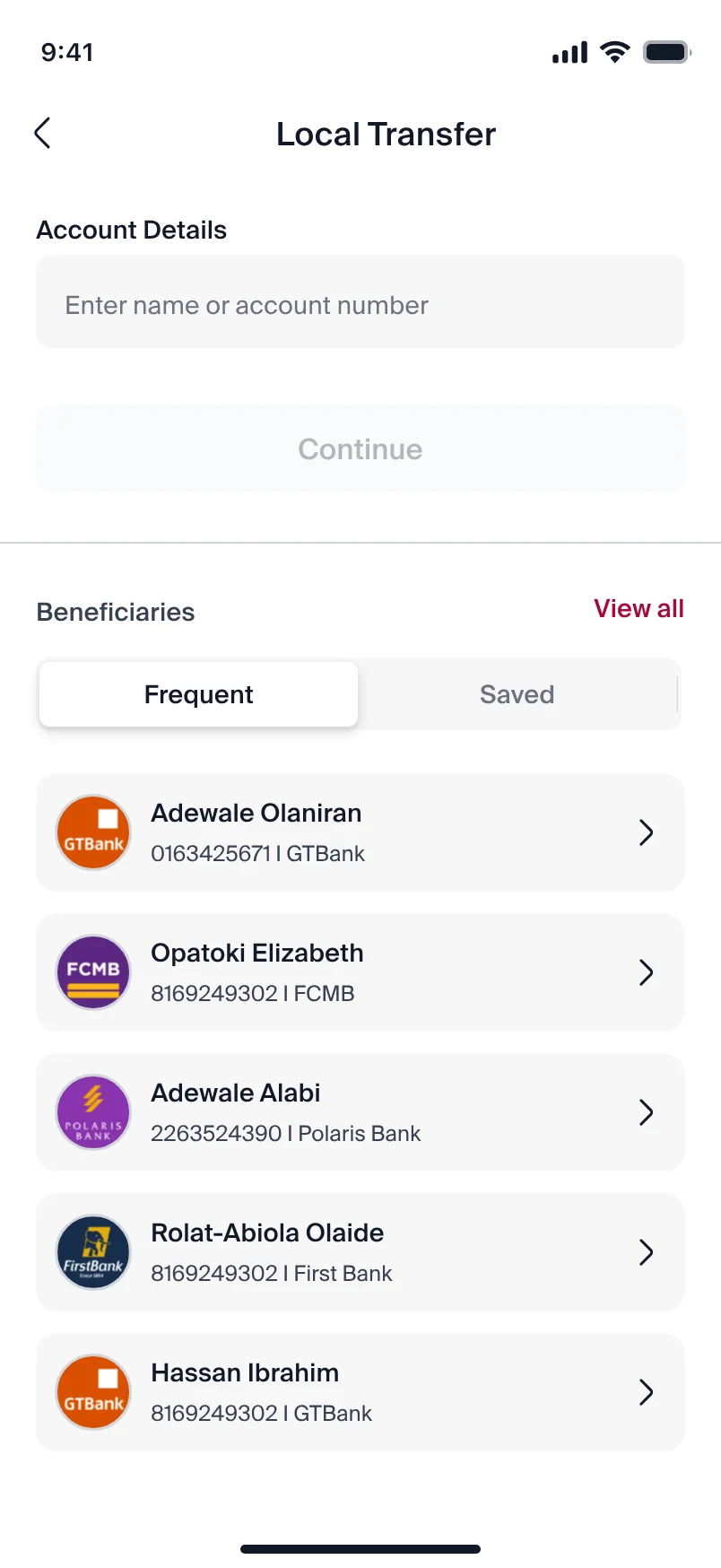
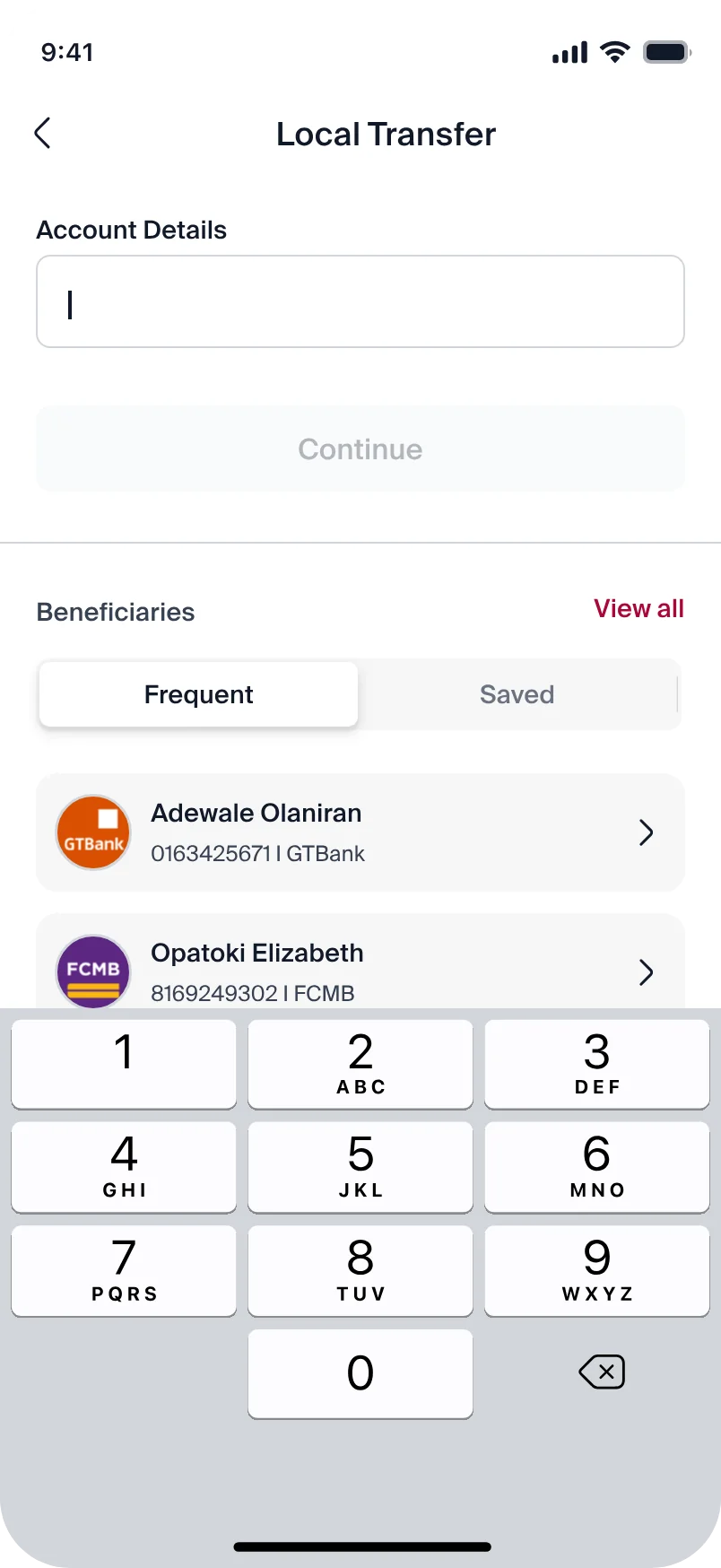
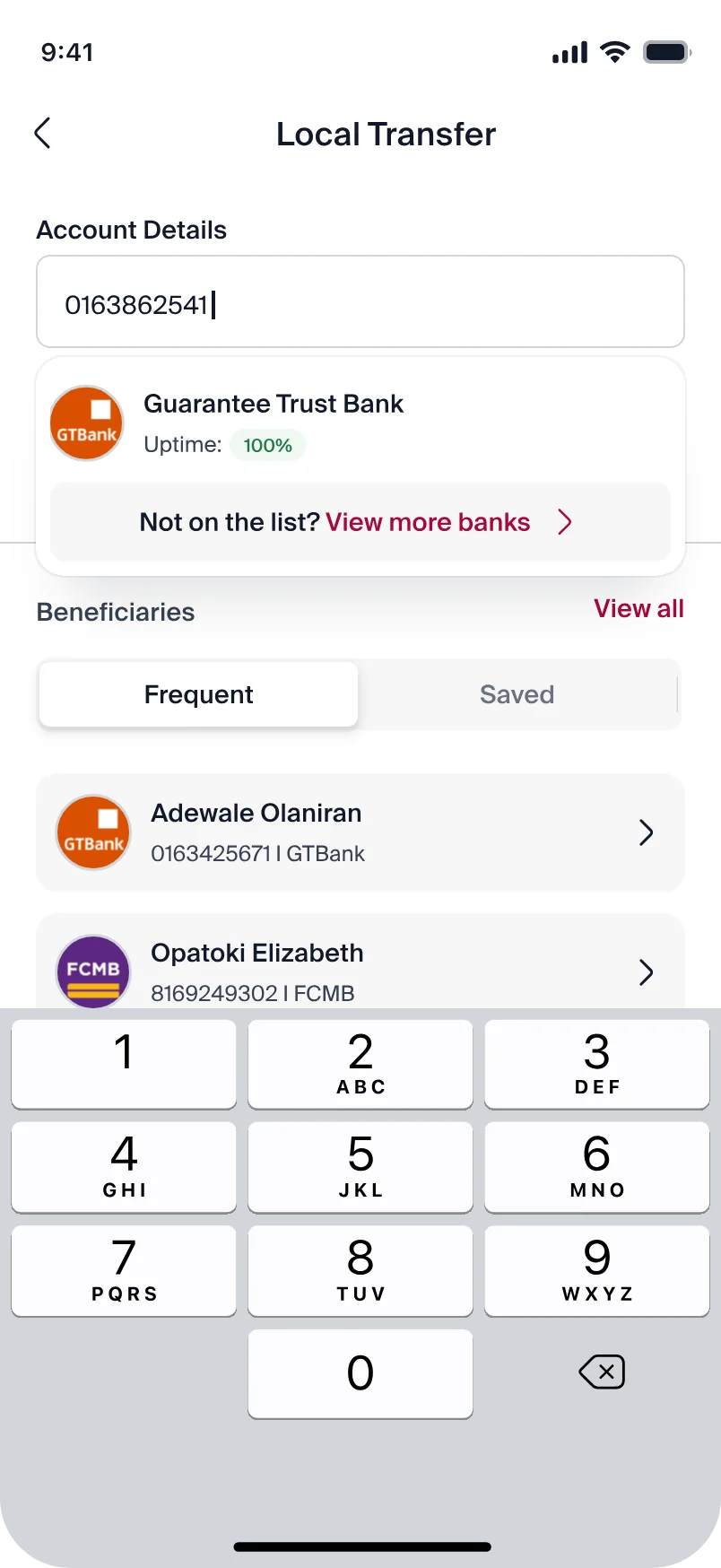
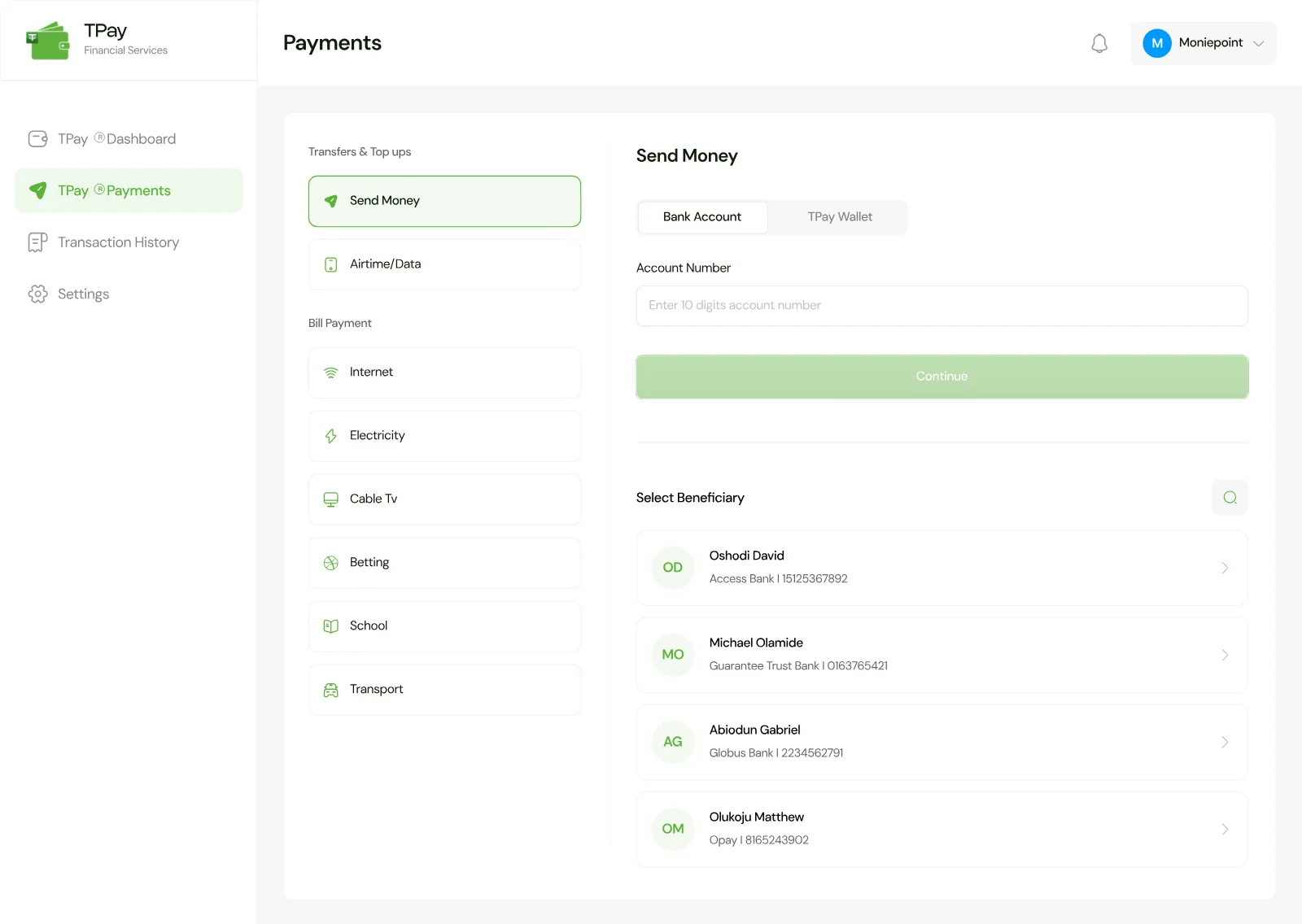
Users make payments such as sending money, buying airtme/data and also carry out other bill payments here. It also lets users see beneficiaries making repeat transactions quicker and easier
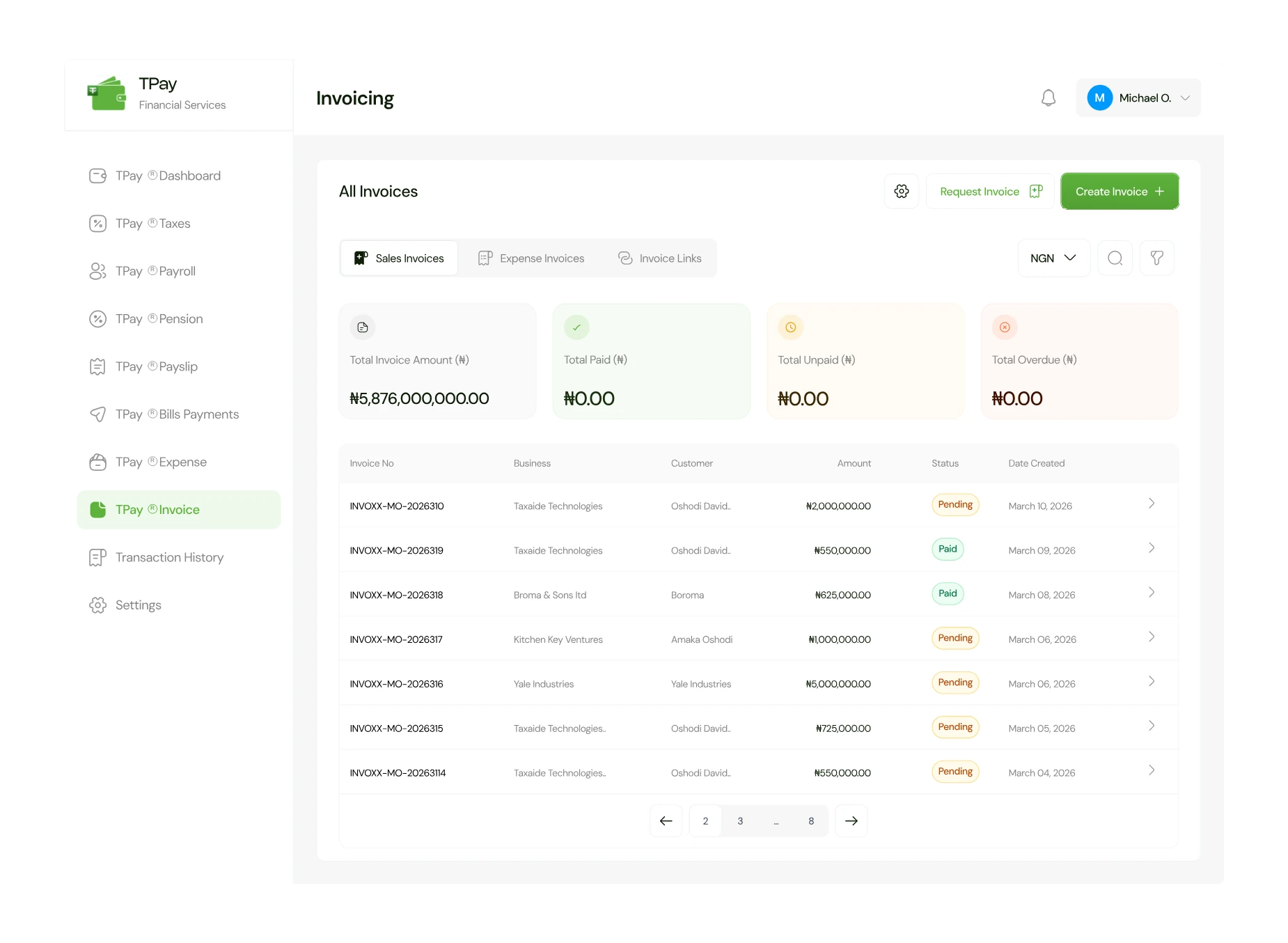
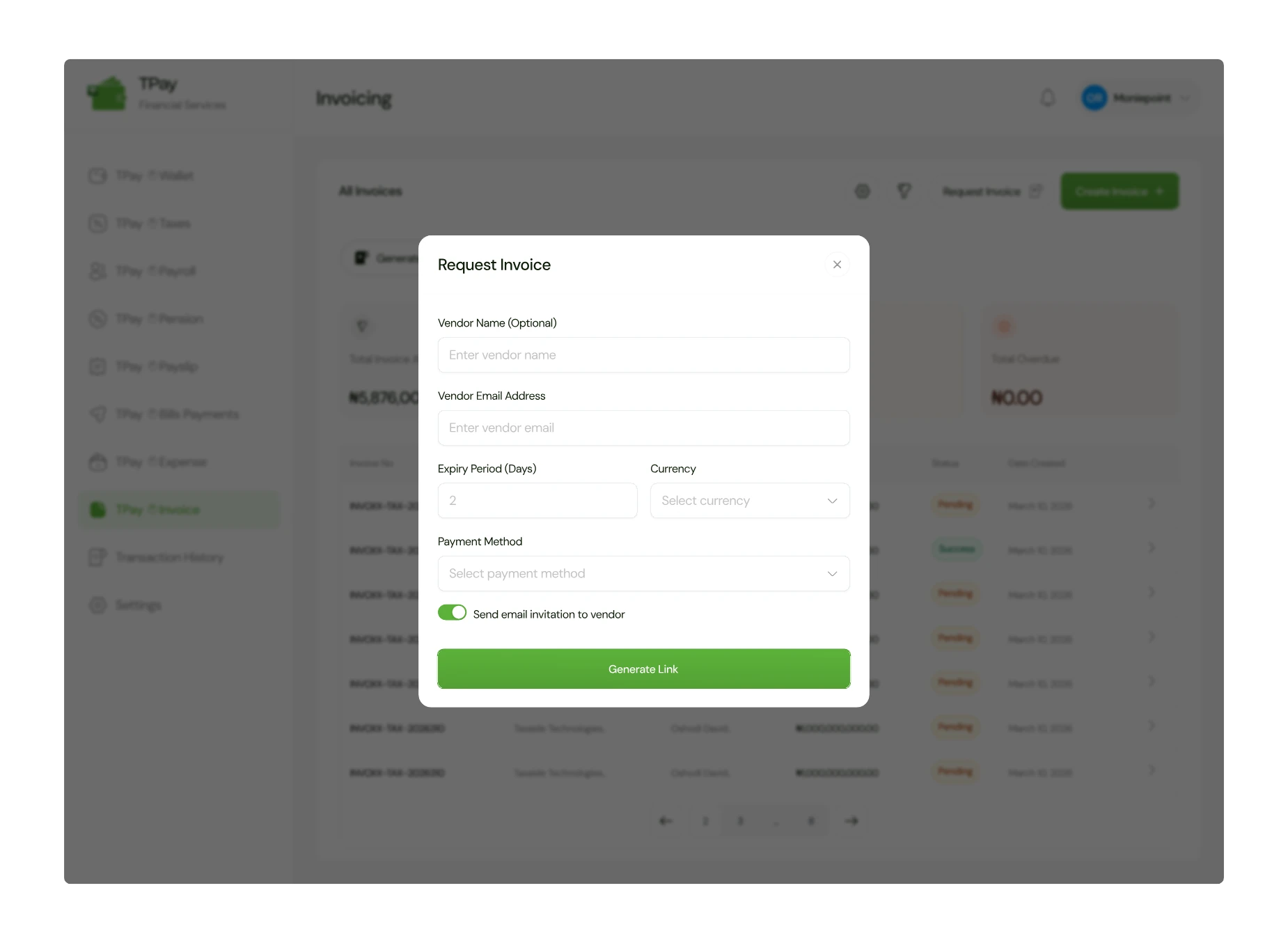
Invoicing
Users can create, request and manage all their invoices here. They can also track invoices that have been sent out and do followups
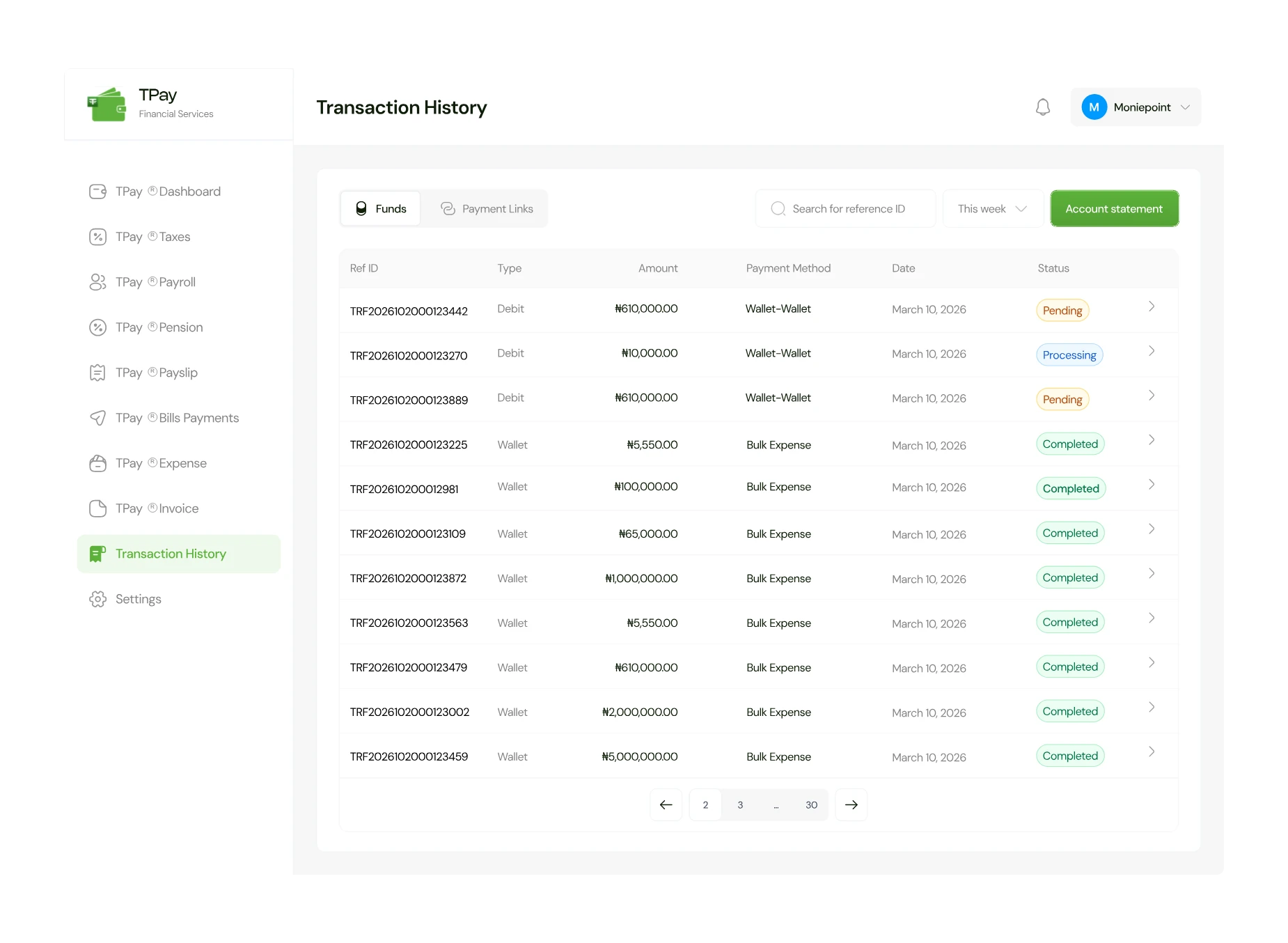
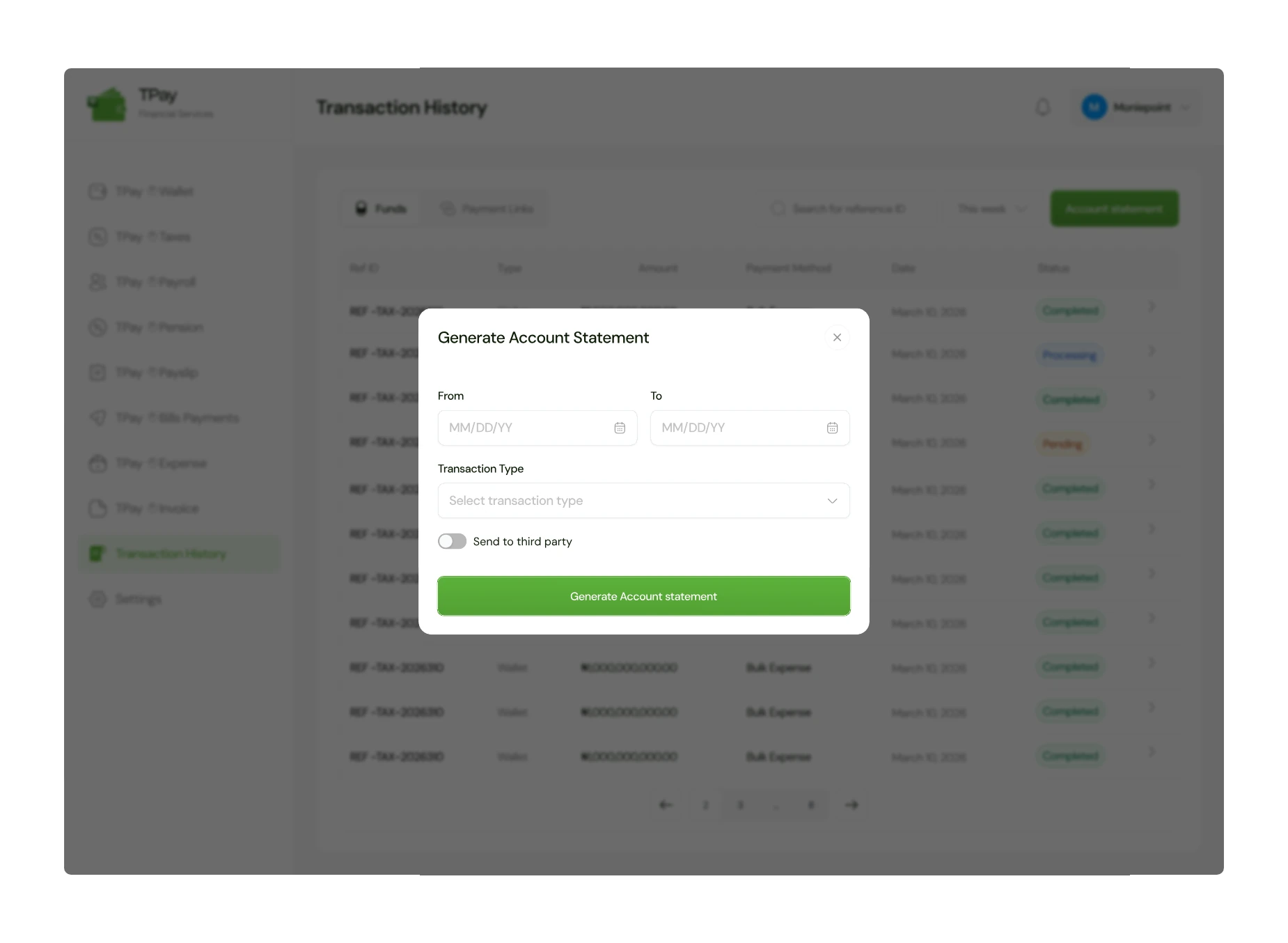
Transaction History
A dedicated page for transaction history. Users can also generate account statement
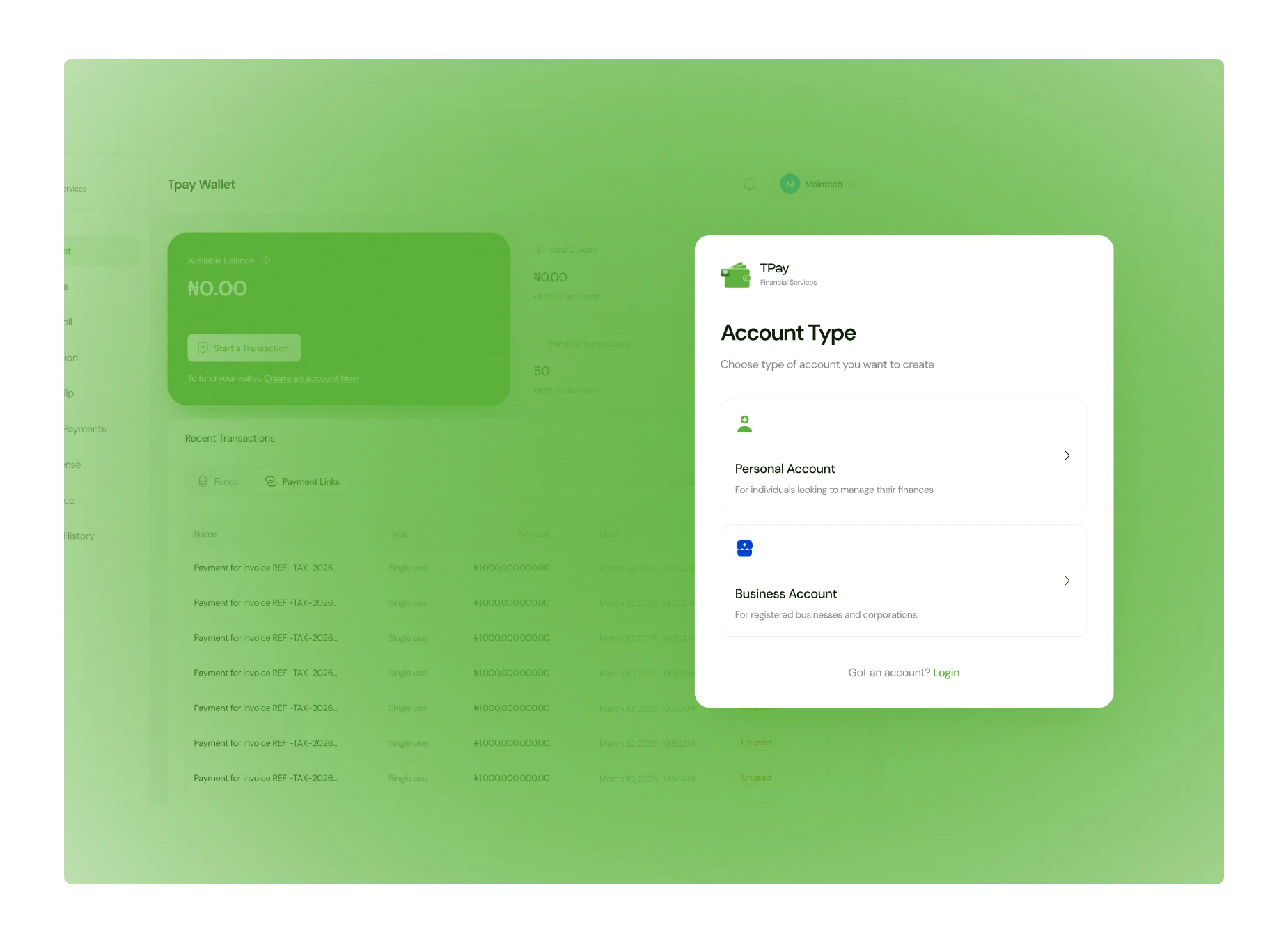
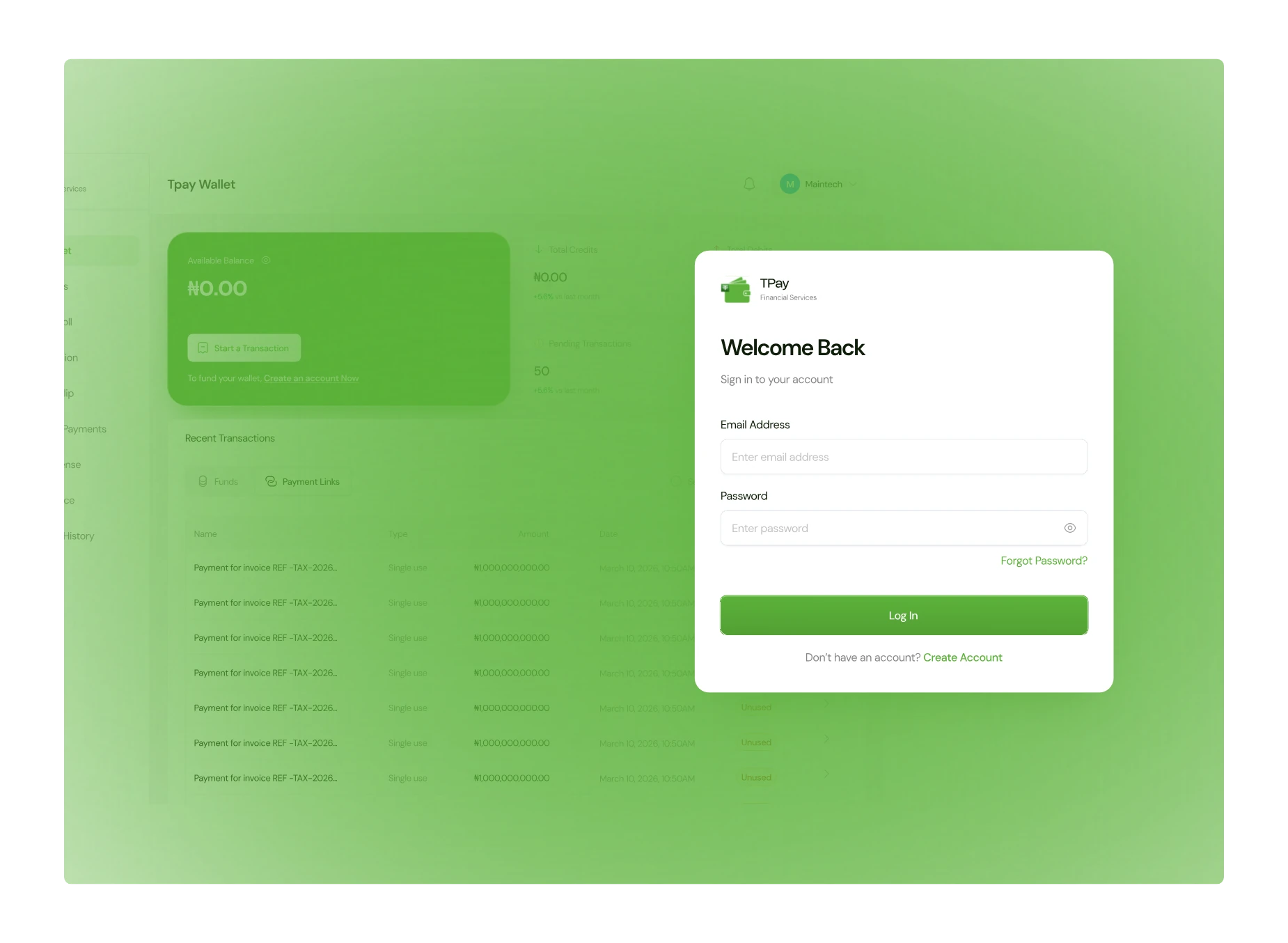
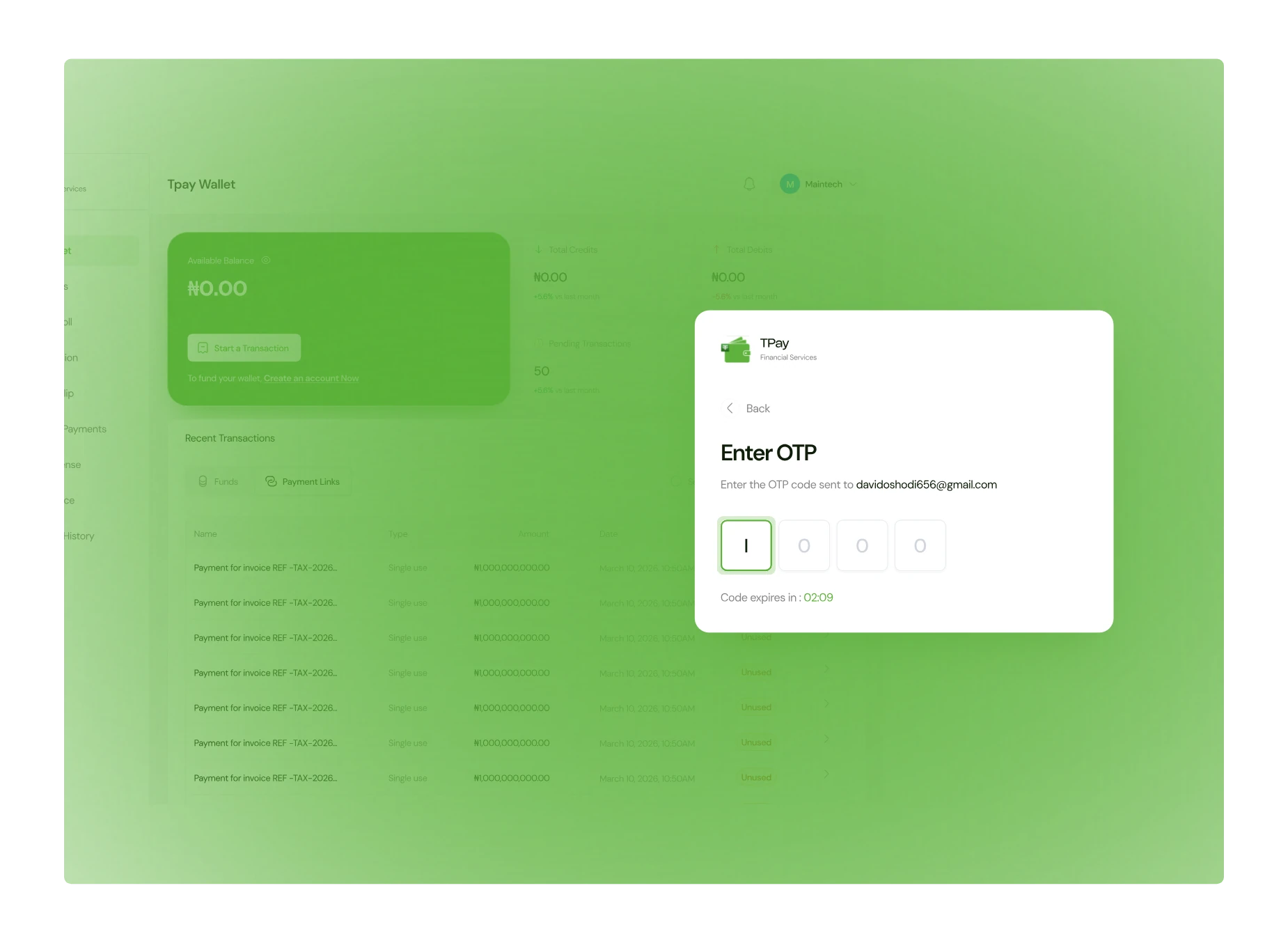
Auth Pages
The login portal where uses login to their account, and also where users can create new account to access the platform
CONCLUSIONS
Reflection & Key takeaways
This project reinforced how important structure is in financial products. When related tasks are connected and easy to find, users can act with more confidence and spend less time figuring out the interface.
It also highlighted the value of consistency. A shared visual and interaction system makes a growing platform feel more dependable and easier to learn.
Most importantly, the project strengthened my approach to designing financial experiences that are clear, scalable, and built around the tasks people perform every day.